
RSS Under Guruji
Educational Institutions Inspired by Guruji
1940
Leadership of Guruji
After the passing of Keshav Baliram Hedgewar, Madhav Sadashivrao Golwalkar became .
Early 1940s
Development
Guruji focused on discipline, training camps, structured programs to build a volunteer.
1948
Period of Challenge
After the Assassination of Mahatma Gandhi, the RSS faced a temporary ban. Guruji guided .
1949
Reorganization
the lifting of the ban, RSS resumed with renewed structure and increased participation.
1950s–1960s
Nationwide Expansion
RSS shakhas expanded rapidly across India, and many associated organizations began working.
1973
Legacy Continues
Guruji passed away on 5 June 1973 in Nagpur, leaving behind a strong nationwide organization.
Key Organisational Reforms
Strengthening Shakha System
Guruji strengthened the daily shakha system, making it the core platform for training volunteers in discipline.
Structured Leadership Training
Special training camps and leadership programs were to develop capable leaders who could guide RSS.
Nationwide Organisational Network
The organizational was expanded across multiple states, creating a strong nationwide network of volunteers.
Focus on Character Building
Guruji character development, discipline, and service as central values in building responsible citizens.
Expansion into Social Sectors
New initiatives and affiliated were encouraged to work in fields such as education, social service.
Long-Term Organisational
Guruji laid the foundation for long-term growth by establishing systems, training models, and structures.
Training & Volunteer Model
The training and volunteer model developed under the leadership of Madhav Sadashivrao Golwalkar played a major role in shaping the growth and discipline of the Rashtriya Swayamsevak Sangh. The system focused on character building, leadership development, and social responsibility through a structured and community-based approach. At the heart of this model is the daily shakha, a local gathering where volunteers participate in physical exercises, games, group discussions, and cultural activities. These gatherings help build discipline, teamwork, and a strong sense of unity among participants. The shakha also serves as a platform where experienced volunteers mentor new members and encourage active participation in community life. In addition to daily activities, the organization conducts special training camps and leadership programs designed to prepare volunteers for greater responsibilities. These camps provide deeper training in organizational skills, cultural awareness, and service-oriented leadership. Through such programs, volunteers learn how to organize events, guide community initiatives, and support social welfare efforts.
Freedom Movement and Post-Independence India
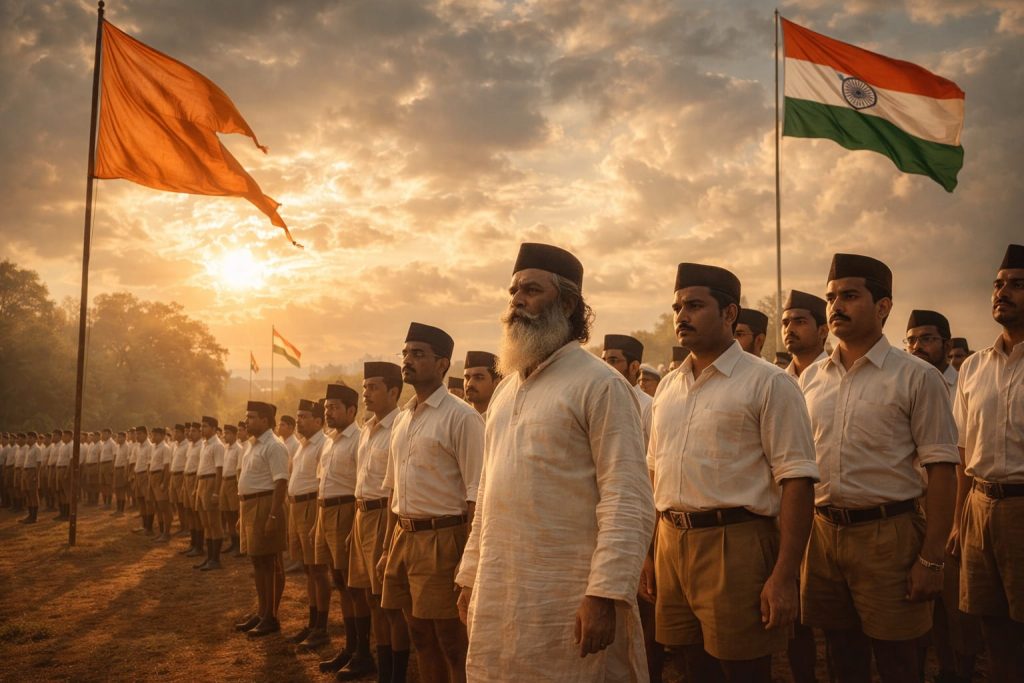
The leadership of Madhav Sadashivrao Golwalkar developed during a period of major national change surrounding the Indian Independence. During these years, the Rashtriya Swayamsevak Sangh expanded its network of volunteers and local shakhas focused on discipline, social service, and community organization.
After independence, the organization continued its activities through training programs, educational initiatives, and social work across different parts of India. Despite challenges following the Assassination of Mahatma Gandhi, the RSS reorganized and resumed its work in 1949, continuing to grow in the decades that followed.