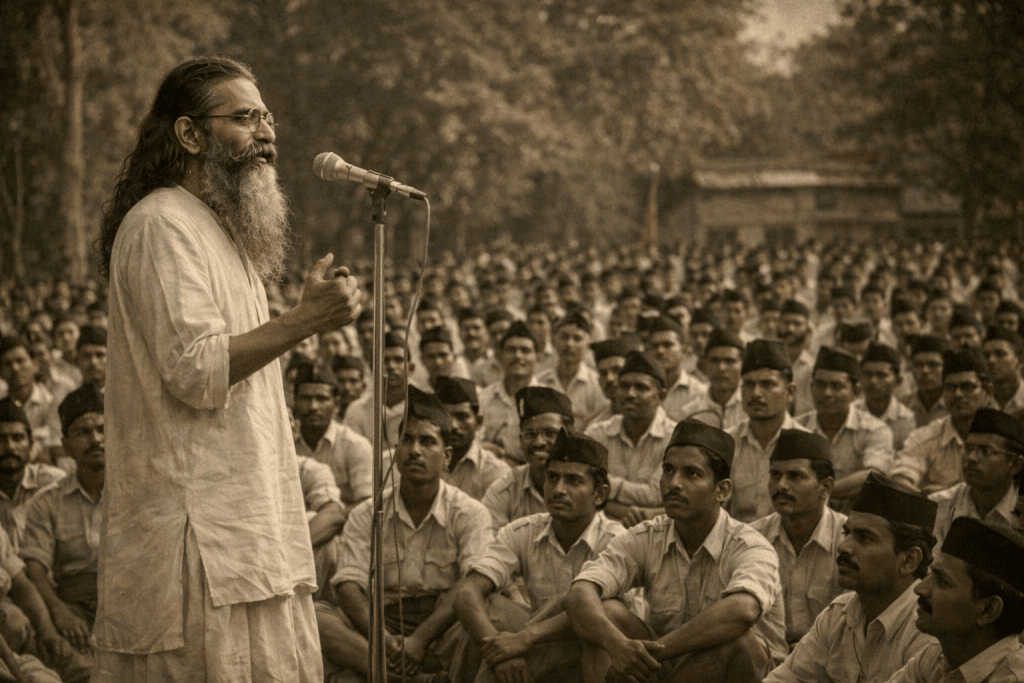
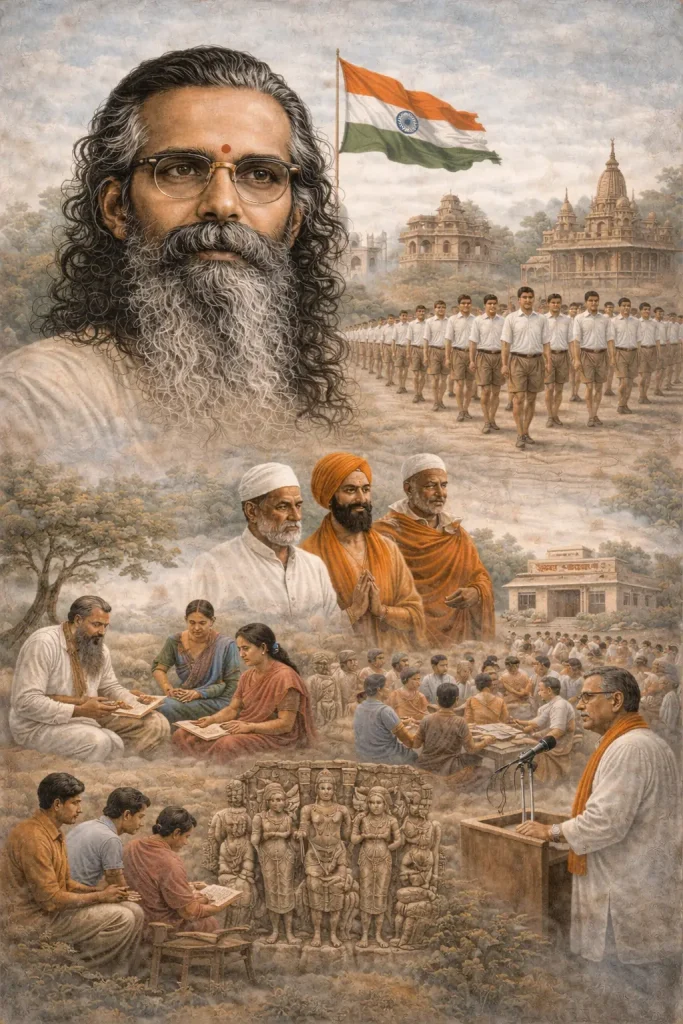

Ideology & Vision
Core Philosophy – Cultural Nationalism
The ideological vision of Madhav Sadashivrao Golwalkar emphasized the importance of cultural nationalism as a foundation for national unity and collective identity.
He believed that India’s strength lies in its civilizational heritage, shared traditions, and deep-rooted cultural values developed over centuries.
According to this perspective, national identity is shaped not only through political boundaries but also through cultural continuity, social cohesion, and historical consciousness.
Concept of Hindu Rashtra

Cultural Identity of the Nation
Golwalkar described the nation as a cultural entity shaped by shared traditions, history, and civilizational values. In this perspective, the idea of Hindu Rashtra emphasizes cultural unity and continuity rather than purely political definitions of nationhood. Supporters interpret it as an effort to highlight India’s ancient heritage and the role of cultural identity in shaping national consciousness.

Society as a Cultural Community
According to this vision, society functions as a large cultural community where individuals are connected through shared traditions, customs, and collective responsibility. Golwalkar believed that a strong society grows from mutual respect, social harmony, and a deep awareness of cultural heritage.

Unity and Collective Responsibility
The concept also emphasizes unity among diverse communities within the broader cultural framework of the nation. Golwalkar often stressed discipline, cooperation, and service as essential qualities for strengthening society. In this view, national development emerges from collective responsibility and the participation of citizens in social and cultural life.
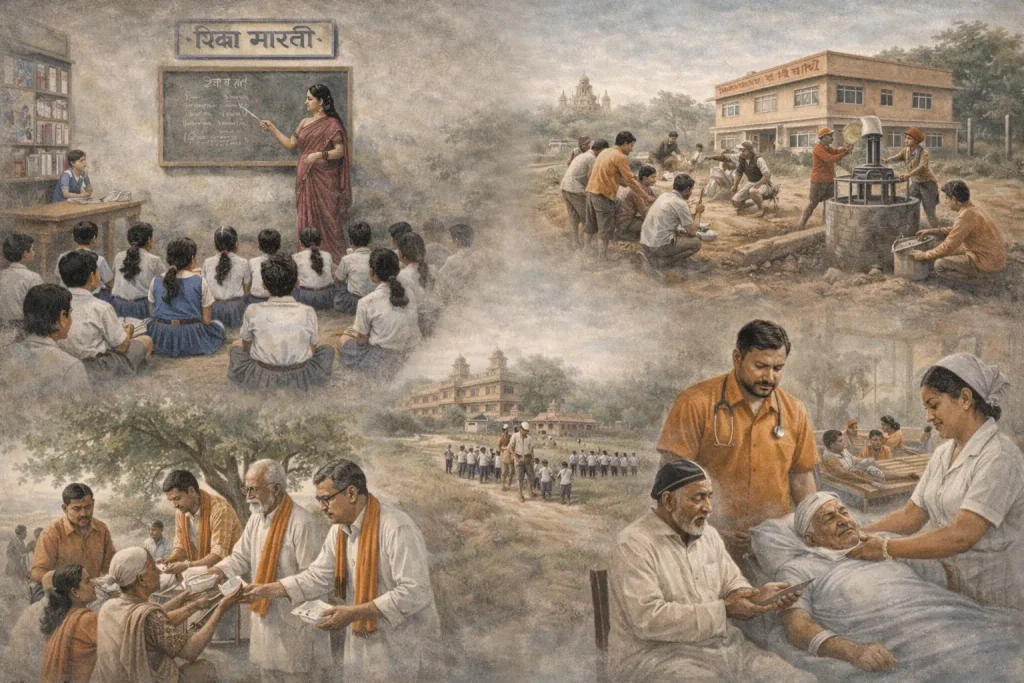
Social Discipline and Seva
Discipline
Emphasis on discipline and character building through collective training and volunteer activities.
Service
Promotion of community service and social welfare activities as a duty toward society.
Volunteerism
Encouragement of voluntary participation in social and educational initiatives across communities.
Nation as Family – Unity in Diversity
Golwalkar described the nation as a collective family in which diverse communities share a common cultural heritage and collective responsibility.
“A nation is not merely a political arrangement but a living cultural community bound by shared traditions and collective spirit.”